
What Actually Happens During a Home Inspection in Central Oregon and Why It Matters
If you’re buying a home in Central Oregon, the home inspection is one of the most important steps in the entire process. Many buyers walk in without a clear picture of what to expect, what inspectors actually look for, or how to use the results to their advantage. Understanding the inspection process can save you thousands of dollars and protect you from buying a home with serious hidden problems.
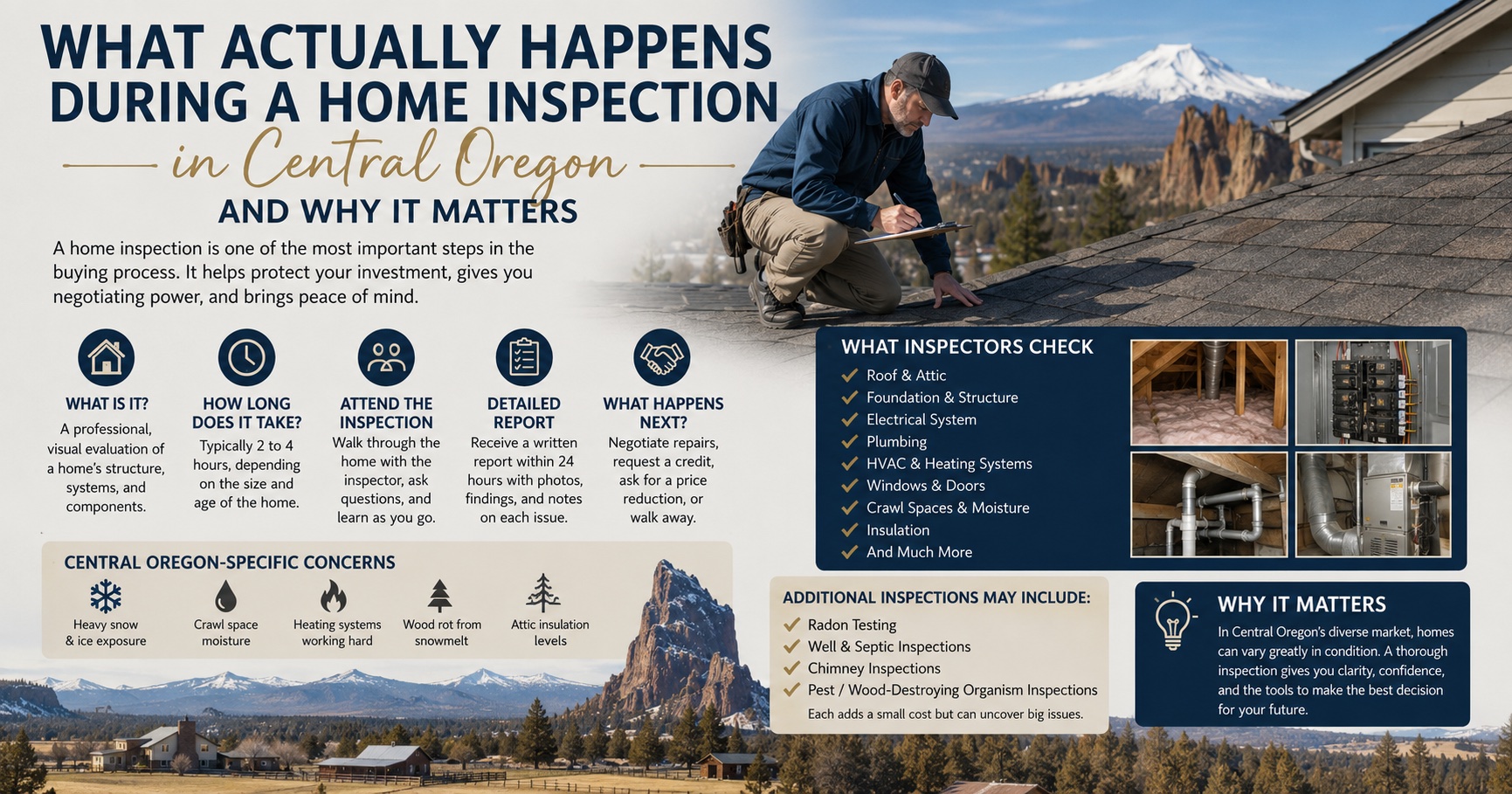
A home inspection is a professional, visual examination of a property’s condition. Licensed inspectors in Oregon evaluate the structure, systems, and components of a home. That includes the roof, foundation, electrical panel, plumbing, HVAC system, and everything in between. In Central Oregon, inspectors also pay close attention to issues that are particularly common in our high-desert climate: attic insulation levels, crawl space moisture, wood rot from snowmelt, and the condition of heating systems that work overtime during our cold winters.
The inspection typically takes two to four hours, depending on the size and age of the home. You’re strongly encouraged to attend. Walking through the property alongside the inspector gives you a firsthand look at any concerns and lets you ask questions as they come up. This is your opportunity to understand the home you are about to purchase at a deeper level, not just from photos and a listing description.
After the inspection, you’ll receive a detailed written report, usually within 24 hours. It documents the inspector’s findings with photos, descriptions, and notes on how serious each issue is. Some items get flagged as safety concerns, others as deferred maintenance, and some as informational observations. Not every finding is a deal-breaker. A good real estate agent will help you distinguish between cosmetic issues and structural or mechanical problems that could signal a much larger investment down the road.
In Central Oregon’s competitive real estate market, knowing how to respond to an inspection report matters. You have several options: you can negotiate with the seller to have specific repairs completed before closing, request a price reduction to account for repair costs, ask for a credit at closing, or in some cases, walk away from the transaction if the findings reveal problems that change the value or desirability of the home. Your contract outlines the specific timelines and terms for your inspection contingency, so act promptly once the report arrives.
A general home inspection is just the starting point. Depending on the property and its location, additional specialized inspections may be recommended. In Central Oregon, these can include radon testing (radon levels in some parts of the region are elevated and worth checking), well and septic inspections for rural properties, chimney inspections for homes with wood-burning fireplaces, and pest or wood-destroying organism inspections. Each adds a modest cost but can reveal issues that a general inspector isn’t licensed or equipped to assess in depth.
The home inspection is not something to rush through or skip to save time or money upfront. It’s one of the most valuable tools you have as a buyer to make an informed decision. In a market like Central Oregon, where properties range from newer Bend subdivisions to decades-old ranch homes in Redmond, Sisters, or Prineville, the condition of a home can vary enormously. A thorough inspection gives you clarity, negotiating power, and peace of mind as you move toward one of the biggest financial decisions of your life.
